
3 Ways to Create Safety for Yourself
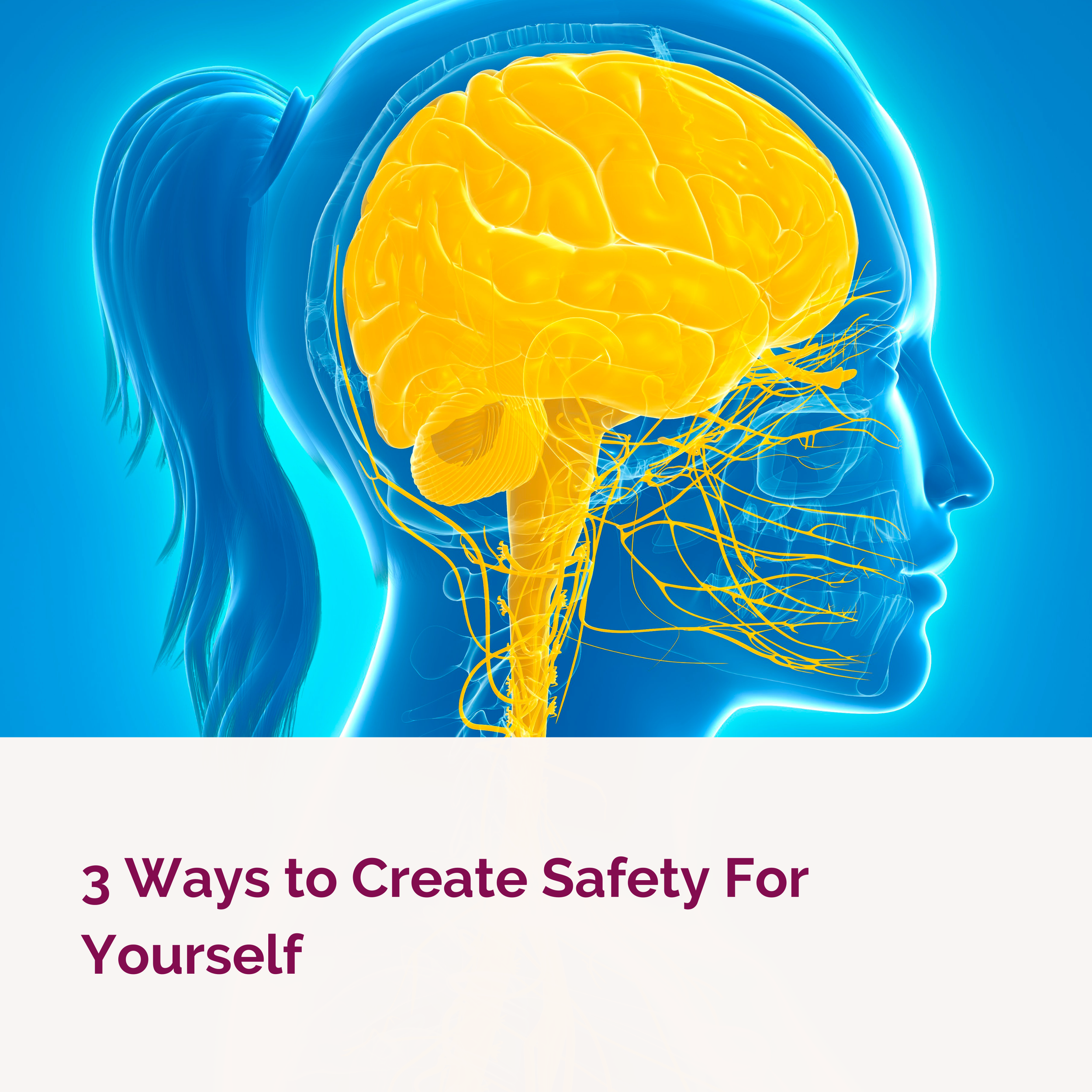
3 Ways to Create Safety for Yourself: And Take a Step Outside Your Comfort Zone
When you feel stuck, your body goes into freeze-mode. Freeze mode is basically a nervous system response that shuts you down. The biological reason for this is that your survival brain is sensing a perceived threat and is working to keep you safe from that danger.
When your nervous system senses danger, it puts you into freeze-mode, which makes you hide or shut down, in an attempt to keep you safe. This is great if there’s an intruder in your home and you need a place to hide quietly until they leave, but it’s not so great if you’re trying to make a move towards something new and risky in order to grow.
For our brains, one of the most common triggers that activate freeze-mode is uncertainty. We are wired to stop and evaluate when we don’t have certainty. And if it’s something very unfamiliar and far outside of your comfort zone, your brain will go into freeze-mode, and your body will take over.
You may feel physical symptoms that stop you from doing anything. It might look like pure exhaustion or brain fog. Or it could be procrastination. You will feel it in your body.
So, what can you do to create safety for yourself, so you can start stepping outside of your comfort zone?
Here are 3 Ways to Create Safety For Yourself and Take a Step Outside of Your Comfort Zone
1. Stop trying to “think” your way out of stress.
When you have a physical response to uncertainty, which is a stressor for the nervous system, you may not be able to think your way out of it. You may experience physical symptoms in your body that stop you from doing anything at all.
It can be even more frustrating to try to think your way out of it. The best way to start feeling safety is to do something that calms you down physically. This could be as simple as taking a walk, listening to some music, or rocking in a rocking chair. I often advise my clients to try anything that would work to sooth a baby. When you’re feeling stressed, try something physical first, then later you can process the thoughts around it.
2. Create Predictability
Once you feel physically calm and regulated, the simplest thing to do next is create some form of predictability. If you can find a way to create an anchor of certainty in regard to your situation or decision, your nervous system will relax a bit.
It may sound counter-intuitive, but it often helps to consider the worst-case scenario and let yourself go over all the possibilities that could go wrong. If your brain can see that the worst-case scenario isn’t as bad as the uncertainty, you may actually feel safer.
An example of this was when I was working with a client who suspected she was going to lose her job. She spent weeks worrying about it, which put her into freeze-mode. We decided to go over the worst-case scenario if she did lose her job, and it didn’t seem like such a life-threatening danger anymore.
She was able to get a head start on creating a business idea and get it started while she was in limbo. By the time she ended up losing her job, she was already working with several clients in her new business. And she got a decent severance package so everything worked out in her favor. She wouldn’t have been able to use the creative, planning, and thought-processing part of her brain if she stayed in freeze-mode.
3. Create agreements with “co-regulators.”
As humans, we need other people to truly feel nervous system safety. We are wired to connect with others. This is called “co-regulation.”
The third thing you can do to create safety for yourself is to create agreements with another human so that when you are feeling frozen or stuck or stressed out, you have another person who is simply “there for you.”
I recommend creating an agreement ahead of time so that you and your co-regulator are on the same page. If you call a friend for this support, make sure they understand, and also make sure you can be the co-regulator for them if they need one. This is one of the many reasons that coaching is so valuable. A coaching session is often a nervous system regulation session and a place to process stress, which will help create safety for your entire system.
To talk more about this with me, book a consultation here.